

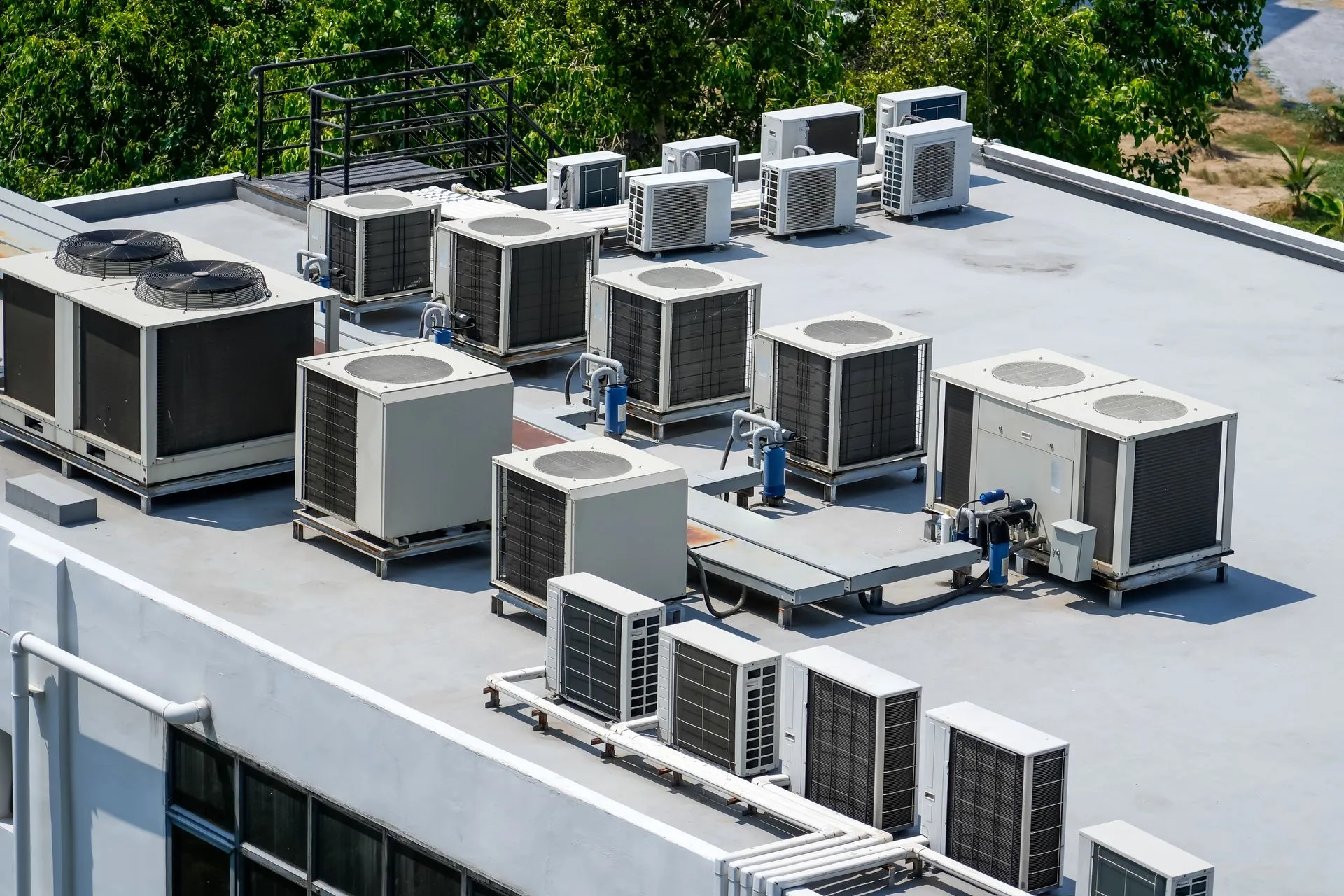
Rooftop HVAC units are a popular choice for commercial properties due to their space efficiency and centralized climate control. Commonly installed on offices, retail stores, warehouses, and schools, these systems offer both advantages and limitations. Understanding the pros and cons of rooftop HVAC units helps building owners and facility managers make informed decisions.
What Is a Rooftop HVAC Unit?
A rooftop HVAC unit (RTU) is a self-contained heating, cooling, and ventilation system installed on the roof of a commercial building. Unlike split systems, all major components—compressor, condenser, evaporator, and air handler—are housed in one cabinet.
RTUs distribute conditioned air through ductwork into different zones of the building, providing centralized temperature control.
Advantages of Rooftop HVAC Units
Space-Saving Design
Installing HVAC equipment on the roof frees up valuable indoor and ground-level space. This is especially beneficial for:
-
Retail environments
-
Restaurants
-
Office buildings with limited mechanical rooms
Simplified Installation
Because all components are packaged into a single unit, rooftop systems are generally easier and faster to install than complex split systems.
Efficient Zoning Capabilities
Rooftop units can be configured to serve multiple zones, allowing different areas of a building to maintain independent temperature settings.
Improved Indoor Air Quality
Modern rooftop HVAC units support advanced ventilation and filtration options, helping reduce:
-
Airborne pollutants
-
Excess humidity
-
Odors and contaminants
This contributes to a healthier indoor environment for occupants.
Easier Maintenance Access
Technicians can perform inspections and repairs without disrupting daily business operations, since the unit is located outside the occupied space.
Disadvantages of Rooftop HVAC Units
Exposure to Weather Conditions
Being installed outdoors means rooftop units are constantly exposed to:
-
Extreme heat and cold
-
Rain, snow, and wind
-
UV radiation
This exposure can accelerate wear and shorten equipment lifespan if maintenance is neglected.
Structural Considerations
Not all buildings are designed to support the weight of a rooftop HVAC unit. Structural reinforcement may be required, increasing installation costs.
Higher Initial Cost
While installation may be simpler, rooftop systems can have higher upfront costs compared to smaller split systems, particularly for large commercial buildings.
Limited Customization for Small Spaces
For smaller buildings or businesses with unique layout requirements, rooftop units may offer less flexibility than ductless or zoned systems.
Roof Penetration Risks
Improper installation can lead to roof leaks or insulation damage, potentially increasing long-term maintenance expenses.
Energy Efficiency Considerations
Rooftop HVAC units can be energy-efficient when properly sized and maintained. Efficiency improves with:
-
High-efficiency compressors
-
Variable-speed fans
-
Smart thermostats and building automation systems
-
Well-sealed and insulated ductwork
Routine inspections help prevent energy loss and ensure consistent performance.
Ideal Applications for Rooftop HVAC Units
Rooftop systems are best suited for:
-
Retail stores and shopping centers
-
Office buildings
-
Warehouses and industrial facilities
-
Schools and healthcare facilities
-
Restaurants and hospitality spaces
Their centralized design makes them ideal for buildings with open floor plans and consistent occupancy patterns.
Maintenance Best Practices
To maximize performance and lifespan, commercial rooftop HVAC units require regular maintenance, including:
-
Seasonal inspections
-
Filter replacements
-
Coil cleaning
-
Drain line checks
-
Electrical component testing
Preventive maintenance reduces breakdowns and helps maintain energy efficiency.
Conclusion
Rooftop HVAC units offer space efficiency, centralized control, and ease of maintenance, making them a practical choice for many commercial buildings. However, factors such as weather exposure, structural requirements, and upfront costs must be carefully evaluated. When properly selected, installed, and maintained, rooftop HVAC systems can deliver reliable comfort and long-term value.
Frequently Asked Questions (FAQs)
Are rooftop HVAC units suitable for all commercial buildings?
They are ideal for many commercial spaces, but structural capacity and building layout must be evaluated first.
How long does a rooftop HVAC unit typically last?
With proper maintenance, most rooftop units last 15 to 20 years.
Do rooftop HVAC units consume more energy than other systems?
Not necessarily. Energy use depends on system efficiency, sizing, controls, and maintenance practices.
Can rooftop HVAC units support multiple zones?
Yes, many rooftop systems are designed to handle zoning for different areas of a building.
Are rooftop HVAC units noisy?
Noise is generally minimal inside the building since the unit is located outdoors, though sound dampening may be required in some cases.
How often should rooftop HVAC units be serviced?
Professional inspections are recommended at least twice a year, typically before peak heating and cooling seasons.
Are rooftop HVAC units difficult to repair?
Repairs are usually straightforward because components are accessible, but weather conditions can affect service timing.
