

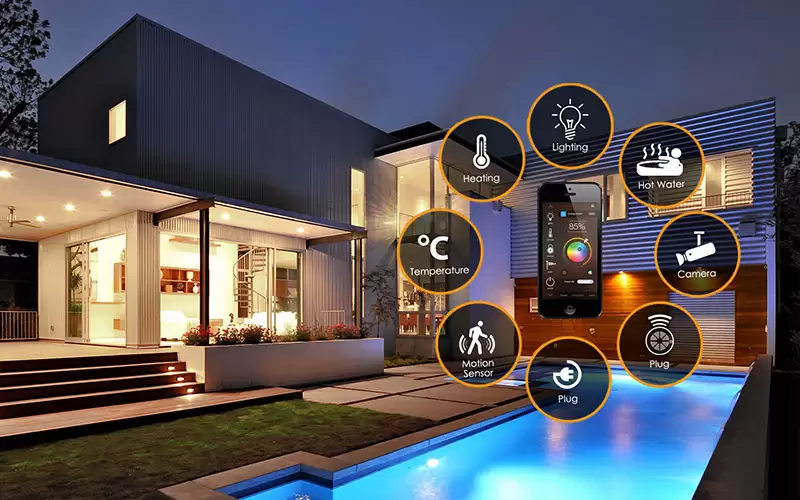
Smart homes were once marketed as a luxury defined by remote-controlled lights and programmable thermostats. Today, they represent something far more profound: living environments that learn, adapt, and respond intelligently to human behavior. This evolution from basic convenience to true intelligence has reshaped how people interact with their homes, blending technology seamlessly into everyday life.
What began as simple automation has matured into an ecosystem powered by data, connectivity, and artificial intelligence, fundamentally changing expectations of comfort, security, and efficiency.
The Early Phase: Convenience as the Core Idea
The first wave of smart home technology focused almost entirely on convenience. Devices were designed to save time or reduce effort, often operating in isolation rather than as part of a unified system.
Key characteristics of early smart homes included:
-
Remote control via smartphone apps
-
Scheduled automation (timers for lights or thermostats)
-
Standalone devices with limited integration
-
User-driven commands rather than proactive behavior
While impressive at the time, these systems required constant manual input. The home reacted only when told what to do, offering convenience without awareness.
Connectivity Changes Everything
The real transformation began when devices started communicating with each other. Faster internet, cloud computing, and standardized wireless protocols enabled homes to function as connected ecosystems rather than collections of gadgets.
This shift introduced:
-
Centralized control across multiple devices
-
Cross-device automation (lights responding to door locks or motion sensors)
-
Remote monitoring from anywhere in the world
-
Software updates that improved functionality over time
Connectivity laid the foundation for intelligence, allowing systems to share data and coordinate actions in meaningful ways.
The Rise of Intelligent Automation
Modern smart homes are no longer limited to pre-set rules. They increasingly rely on machine learning and contextual awareness, allowing systems to adjust behavior dynamically.
Examples of intelligent automation include:
-
Climate systems that learn household routines and adjust temperatures automatically
-
Lighting that adapts to time of day, weather, and occupancy
-
Security systems that distinguish between residents, guests, and unusual activity
-
Energy management that optimizes usage based on real-time demand
Instead of reacting to commands, the home begins to anticipate needs, reducing friction and manual oversight.
Voice and Natural Interaction
Another milestone in smart home evolution is the shift from screens and apps to natural interaction. Voice control and conversational interfaces have made technology more accessible and intuitive.
This development has enabled:
-
Hands-free control of multiple systems
-
Faster, more natural interactions for all age groups
-
Greater accessibility for users with mobility or visual limitations
-
A reduced learning curve for complex systems
Natural interaction moves smart homes closer to feeling like responsive companions rather than technical tools.
Data-Driven Personalization
At the heart of intelligent living is personalization. Smart homes now collect and analyze data to tailor experiences to individual preferences without explicit instructions.
Personalization can influence:
-
Lighting tones that match mood or activity
-
Music and media recommendations by time or context
-
Morning and bedtime routines customized per user
-
Environmental adjustments based on long-term habits
When done responsibly, this personalization creates environments that feel uniquely attuned to their occupants.
Security, Privacy, and Trust
As intelligence increases, so does the importance of security and privacy. Modern smart homes must balance advanced monitoring with ethical data handling and user control.
Key considerations include:
-
Strong encryption and secure authentication
-
Local processing to reduce unnecessary data sharing
-
Transparent privacy settings and user consent
-
Clear control over what data is collected and stored
Trust is essential. A truly intelligent home empowers users without compromising autonomy or safety.
Smart Homes as Living Systems
The most advanced smart homes function less like machines and more like living systems. They adapt over time, respond to change, and improve through feedback.
This living-system approach delivers:
-
Reduced energy waste
-
Lower cognitive load for residents
-
Increased comfort without micromanagement
-
Long-term adaptability as lifestyles change
The home becomes an active participant in daily life rather than a passive structure.
The Future of Intelligent Living
The next stage of smart home evolution points toward predictive intelligence and deeper integration. Homes will increasingly understand not just behavior, but intent, context, and well-being.
Emerging trends suggest:
-
Proactive maintenance alerts before systems fail
-
Health-aware environments that support sleep and wellness
-
Seamless integration with transportation, work, and city infrastructure
-
Adaptive homes that evolve alongside families and aging residents
The future smart home will not feel “smart” in a technical sense. It will simply feel right.
Frequently Asked Questions
What is the difference between a smart home and an intelligent home?
A smart home focuses on automation and remote control, while an intelligent home uses data and learning to adapt proactively to user behavior and context.
Do intelligent smart homes require constant internet access?
Many features rely on connectivity, but modern systems increasingly support local processing to maintain functionality during outages.
Are smart homes only useful for large houses?
No. Intelligent features can enhance apartments, condos, and small homes by improving efficiency, comfort, and security.
How long does it take for a smart home to “learn” user habits?
Learning periods vary by system, but many adapt within days or weeks based on consistent routines and interactions.
Can intelligent smart homes reduce energy costs?
Yes. Adaptive climate control, lighting optimization, and usage monitoring often lead to measurable energy savings over time.
Is it possible to control how much data a smart home collects?
Most modern systems provide privacy controls that allow users to limit data collection, storage, and sharing.
Will smart homes become obsolete quickly as technology changes?
Well-designed smart homes are software-driven and updatable, allowing them to evolve rather than become outdated.
