

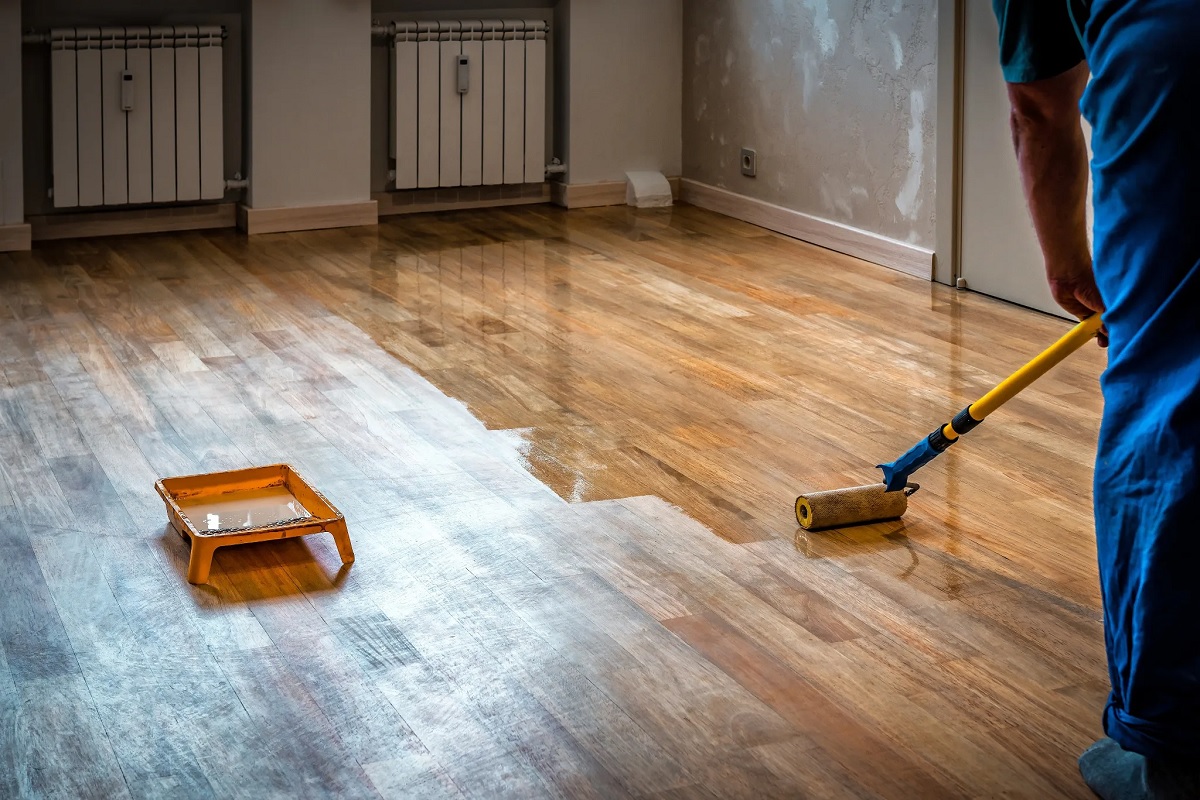
Dark timber floors can make a room feel smaller and heavier than it needs to be. Lightening them opens up the space and reflects more natural light, which suits many Australian homes with their bright, open layouts. The goal is to lift the tone while keeping the grain visible, so the floor still shows its character rather than looking like a flat, painted surface.
One popular method is Litenit bleaching, a two-part process that removes colour from the wood fibres without stripping away the texture. This works well on species like Tasmanian oak, blackbutt and messmate, which can turn quite golden or orange over time. Because the bleach reacts with the timber itself, the grain pattern stays clear and the surface keeps its depth.
Before you start any Litenit bleach treatment, sand the floor back to bare timber. Old coatings, stains and oils block the bleach from penetrating evenly, which leads to patchy results. Work through the grits properly, finishing with a fine sand so the surface is smooth and ready to absorb the solution. Vacuum thoroughly and wipe down with a damp cloth to lift any remaining dust.
Choosing Your Method
There are a few ways to lighten timber, and each gives a slightly different result.
- Two-part wood bleach: Strong enough to remove natural colour and tannin stains. Apply the first solution, wait, then apply the second to activate the reaction. Follow the drying times on the product.
- White or liming oils: These sit on top and add a soft, whitewashed look while letting the grain show through. Less dramatic than bleach, but easier to apply.
- Water-based whitewash coats: A diluted white tint that lightens the tone without hiding the pattern. Good for a subtle lift.
Match your method to how much change you want. Bleach gives the biggest shift in colour, while oils and washes offer gentle control.
Protecting the Grain
The grain is what gives timber its warmth, so avoid anything that fills or masks it. Steer clear of thick, high-build coatings that pool in the texture. Instead, use a matte or satin finish that follows the surface closely.
Apply any topcoat in thin, even layers. Water-based polyurethanes stay clearer than oil-based ones, which tend to add a yellow cast and darken the floor again over time. Two to three light coats usually give enough protection for a busy household.
Testing First
Always test on an offcut or a hidden corner. Timber reacts differently depending on age, species and past treatments, so a small trial saves you from surprises across the whole floor. Check the result in daylight, since artificial light can hide subtle colour shifts.
Keep the room well ventilated while you work, and wear gloves and eye protection with bleach products. Allow full curing time before moving furniture back in. With careful prep and the right finish, you can lift the tone of your floors and still see every line of the natural grain.
